Industries Served | Industrial Fluids & Lubricants Supply
Industries Served
Industrial operations do not buy fluids casually. They buy to protect uptime, meet spec, reduce risk, and keep critical equipment running.
We supply industrial hydraulic fluids, turbine oils, gear oils, compressor oils, greases, transformer oils, heat transfer fluids, metalworking fluids, immersion cooling fluids, and condition monitoring programs to sectors where reliability matters.
Below are the industries that drive the majority of our supply focus. These six represent our primary revenue concentrations. They are not exclusive. Additional sectors are listed further below.
If your facility operates rotating equipment, hydraulic systems, turbines, compressors, gearboxes, or transformers, you likely fall within our supply scope.
Power Generation
Power generation facilities operate continuously and cannot tolerate lubrication errors.
This includes:
- Combined cycle plants
- Gas turbine peaker plants
- Steam turbine facilities
- Cogeneration plants
- Independent power producers
These sites rely heavily on:
- Turbine oils (R&O and control oils)
- Industrial hydraulic fluids
- Gear oils
- Compressor oils
- Transformer oils and dielectric fluids
- Condition monitoring programs
Spec compliance and documentation are critical in this sector. Deliveries must match site requirements exactly. Documentation must be complete. Downtime is expensive.
When supplying power plants, alignment to OEM and site lubrication specifications is handled carefully and only when verified.

Utilities and Grid Infrastructure

Utilities and transmission operators manage long-life assets where fluid quality and traceability matter.
Typical applications include:
- Substation transformers
- Grid stabilization equipment
- Switchgear hydraulic systems
- Auxiliary rotating equipment
Products commonly supplied:
- Mineral insulating oil
- Natural or synthetic ester dielectric fluids
- Hydraulic fluids
- Industrial greases
- Gear oils
Grid infrastructure projects often require strong documentation, batch traceability, and coordination for staged deliveries. Reclaim and refill projects require service alignment and testing support when applicable.
Wind Energy
Wind assets operate under heavy mechanical stress and variable environmental conditions.
Onshore and offshore wind farms rely on:
- Wind turbine gearbox oils
- Hydraulic fluids
- High-performance greases
- Transformer oils
- Condition monitoring and UOA programs
Wind gearbox lubrication is spec-driven and packaging integrity matters. Batch traceability and clean handling are critical. Oil analysis programs support proactive maintenance planning and reduce catastrophic failure risk.

Heavy Manufacturing
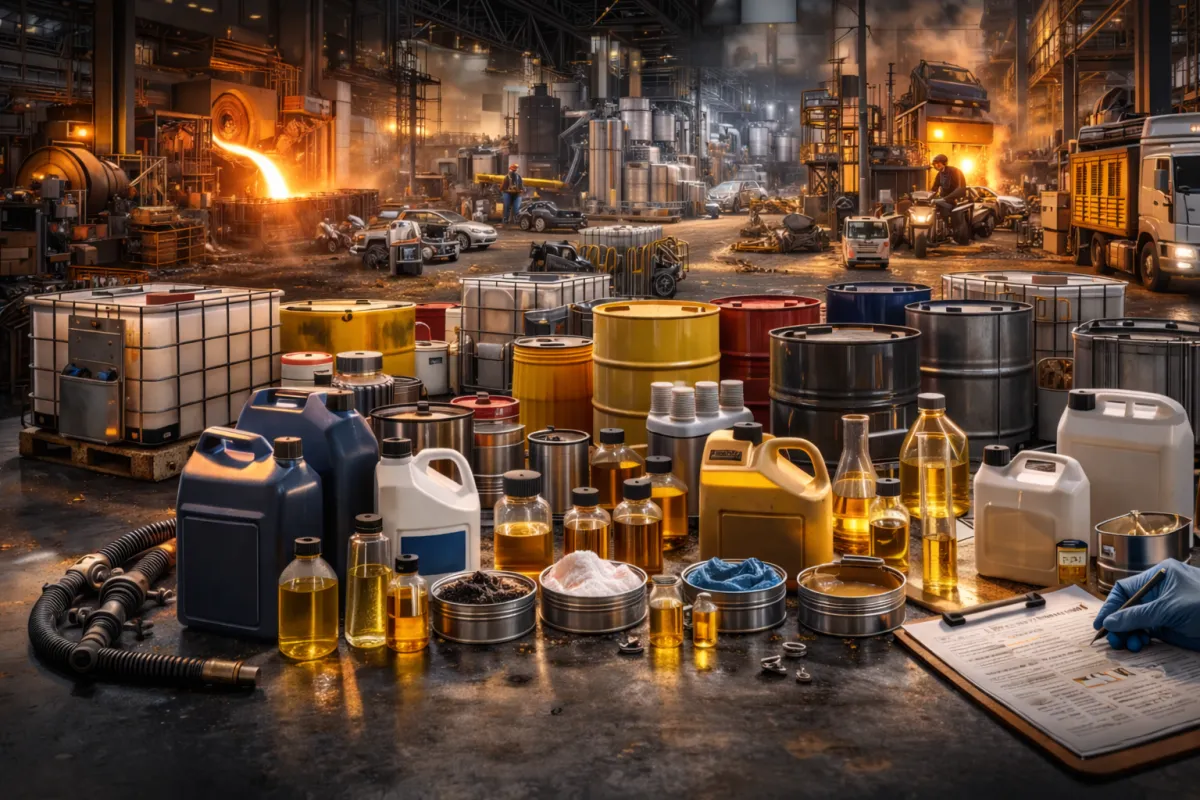
Continuous manufacturing environments consume fluids daily.
Examples include:
- Steel and aluminum mills
- Cement plants
- Automotive production
- Paper and pulp facilities
- Foundries
- Large fabrication shops
Common fluid categories:
- AW ISO hydraulic fluids
- EP and synthetic gear oils
- Compressor oils
- Industrial greases
- Heat transfer fluids
- Metalworking fluids
These sites require consistent replenishment cycles. Packaging format and delivery scheduling matter as much as product selection. Storage capacity and consumption patterns influence supply structure.
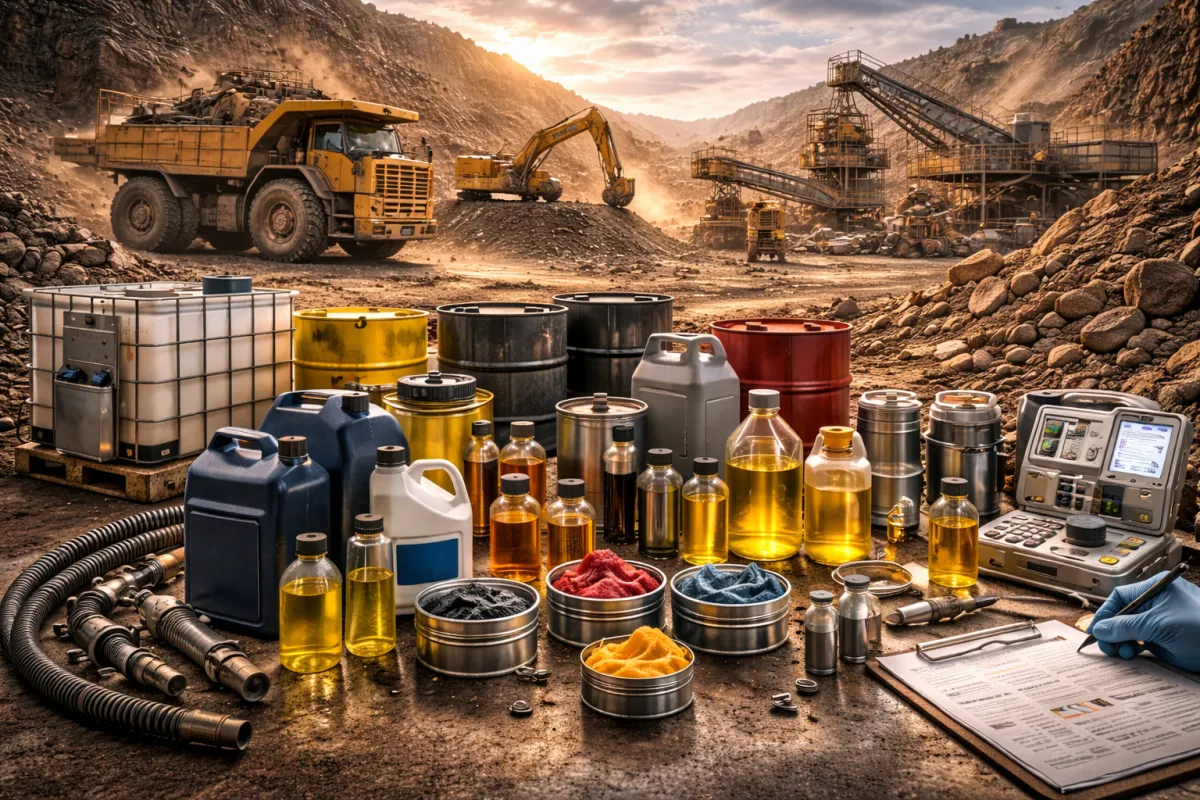
Mining and Mineral Processing
Mining operations use heavy-duty equipment in demanding conditions.
Applications include:
- Surface and underground mining
- Crushing and screening
- Material conveyors
- Processing plants
Fluid demand typically covers:
- Hydraulic fluids
- Industrial gear oils
- Greases
- Compressor oils
- Heat transfer fluids
- Condition monitoring programs
Dust, contamination, and extreme loads increase lubrication stress. Supply must align with high consumption rates and remote delivery considerations.
Oil and Gas (Upstream, Midstream, Downstream)
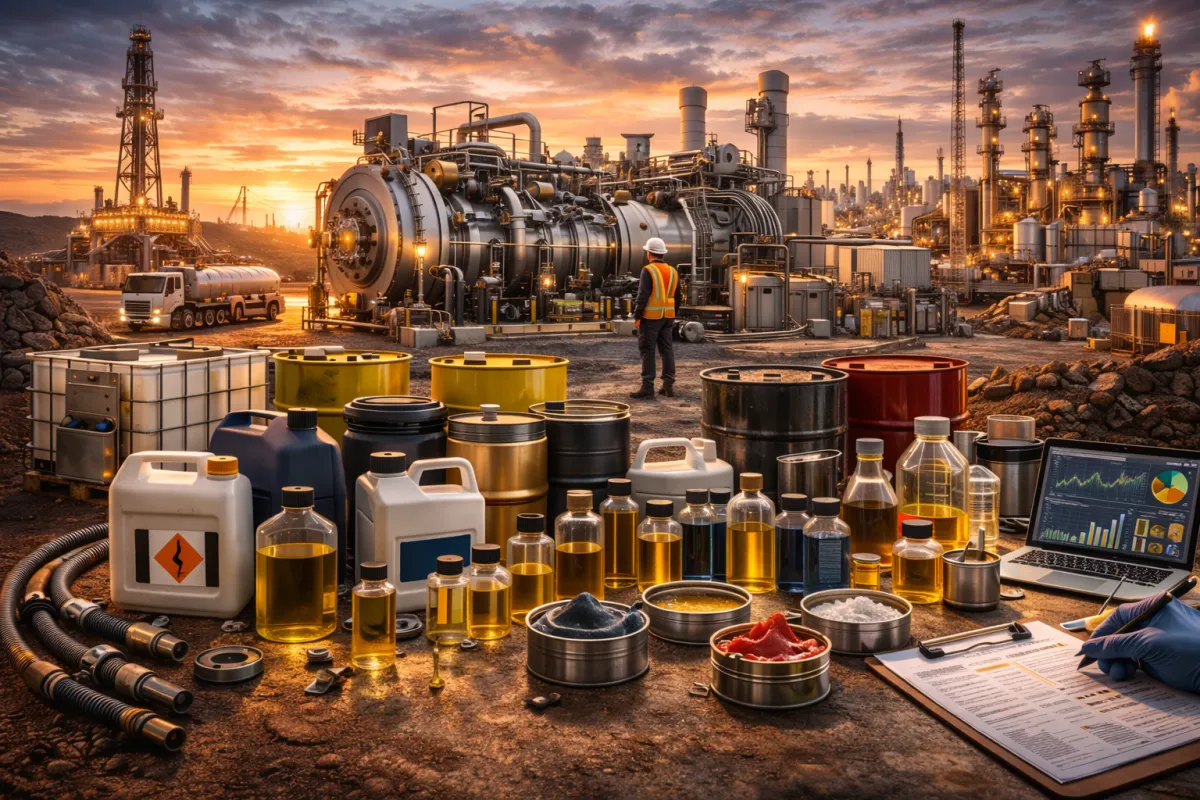
Oil and gas operations run complex mechanical systems with strict operational requirements.
This includes:
- Drilling operations
- Production facilities
- Gas compression stations
- LNG facilities
- Refineries
- Petrochemical plants
Common fluid requirements:
- Compressor oils
- Turbine oils
- Hydraulic fluids
- Gear oils
- Greases
- Heat transfer fluids
- Transformer oils
Gas compression sites in particular require correct oil selection and consistent replenishment. Documentation and spec alignment are essential.
Additional Industries We Support
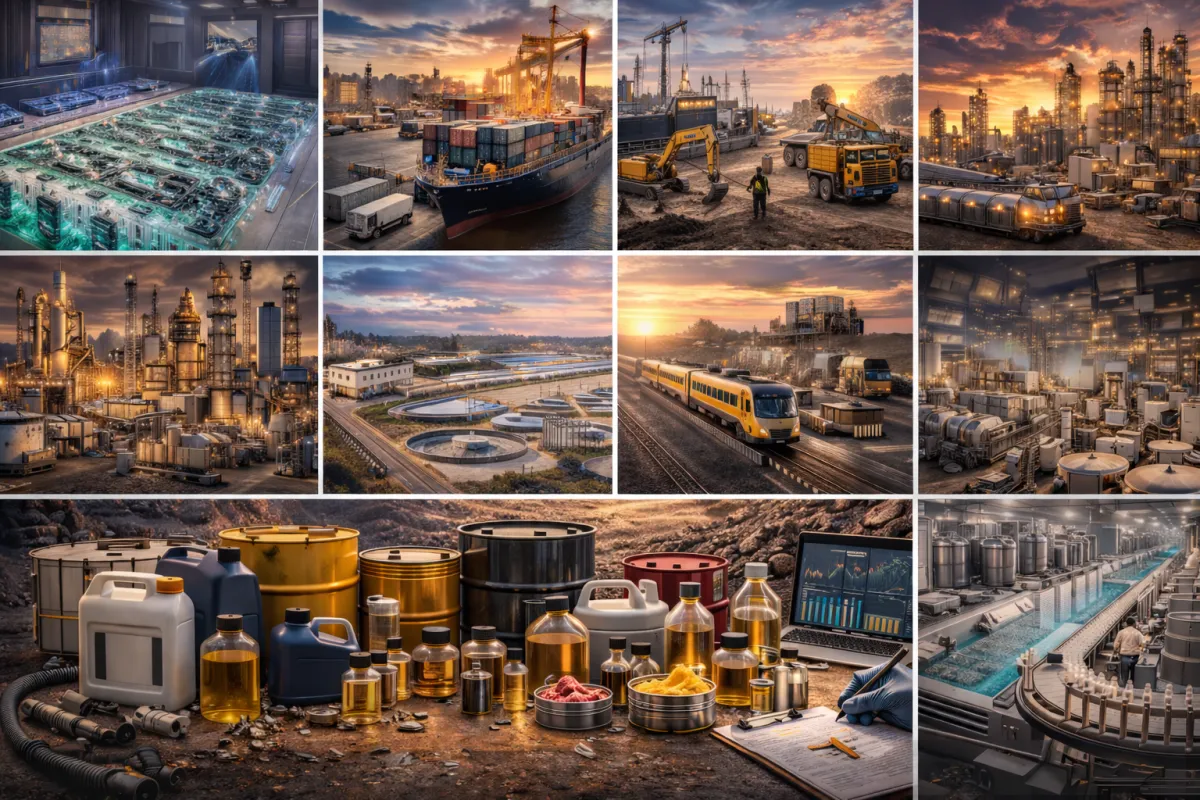
The six sectors above represent our primary revenue drivers. They are not inclusive of the full range of industries served.
Additional sectors include:
- Data centers (including immersion cooling facilities)
- Ports and marine terminals
- Construction and heavy equipment fleets
- Chemical processing plants
- Water and wastewater treatment facilities
- Rail and transit infrastructure
- Aerospace and defense manufacturing (industrial operations side)
- Large-scale agriculture operations
- Food and beverage processing facilities
Each of these sectors uses some combination of hydraulic fluids, gear oils, compressor oils, greases, transformer oils, heat transfer fluids, metalworking fluids, or immersion cooling fluids.
How We Align Supply by Industry
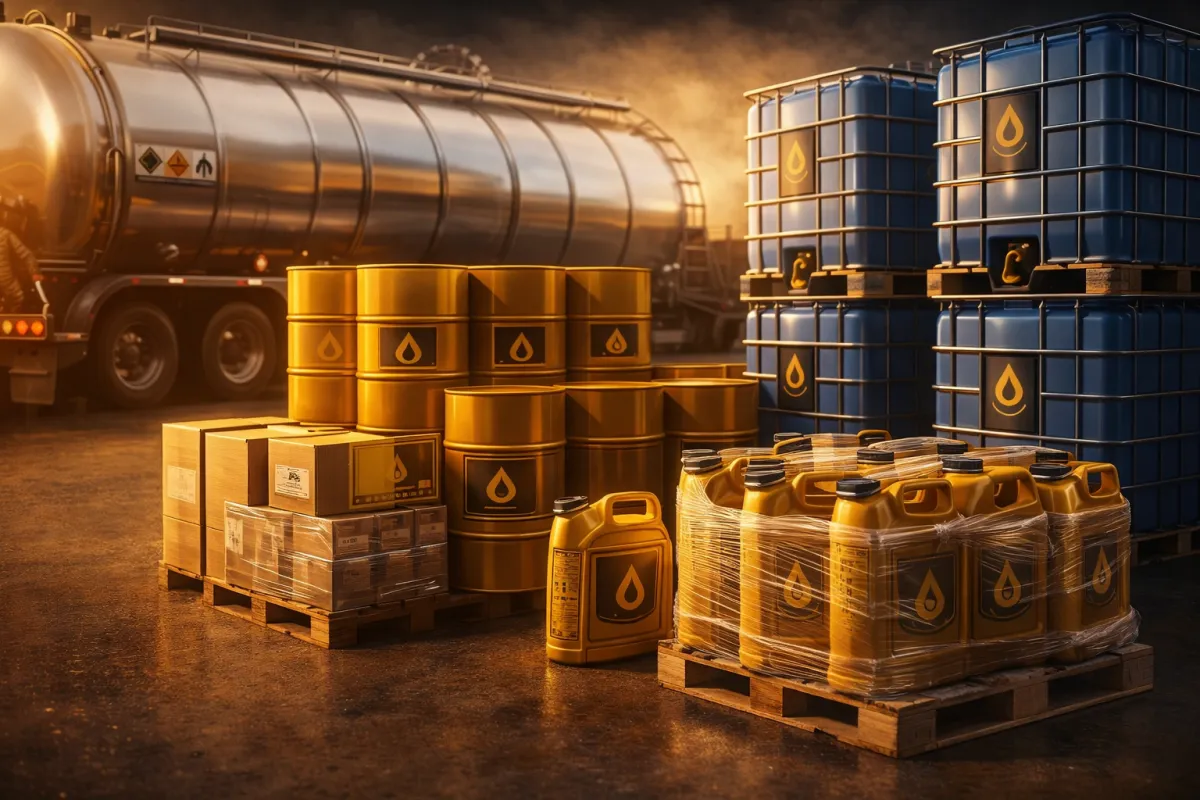
Different industries buy differently.
- Some prioritize bulk tank deliveries.
- Some require sealed drums and tote packaging.
- Some require detailed SDS and COA documentation for every shipment.
- Some rely on oil analysis programs to justify lubricant selection.
We adapt supply structure based on:
- Consumption rate
- Storage capacity
- Regulatory environment
- Equipment criticality
- Maintenance strategy
Our role is not just to move product. It is to align supply with operational reality.
What Buyers Typically Need From Us
- Accurate fluid matching to equipment type
- Documentation aligned with internal compliance processes
- Packaging appropriate to on-site handling capabilities
- Predictable replenishment planning
- Clear communication on delivery timing
- Support for used oil analysis when requested
- Batch traceability when required
- Practical coordination during outages or project windows
Typical requirements vary by industry and application.

How to Request a Quote
If your facility operates critical equipment and requires structured fluid supply, documentation support, or condition monitoring alignment, we can review your requirements.
Submit your equipment types, specifications, and volume needs.
FAQ
Do you only supply the six primary industries listed above?
No. Those six represent our main revenue concentration. We also support additional heavy industrial sectors listed above.
Do you supply both bulk and packaged formats?
Yes. Supply format is aligned with site storage and handling capability.
Can you support turbine and gearbox applications?
Yes, when specifications are provided and verified.
Do you provide documentation with shipments?
Yes. SDS and COA documentation are provided as required.
Do you offer used oil analysis programs?
Yes, through structured programs and partner relationships.
Can you support emergency deliveries?
Timing depends on product availability and logistics alignment. Planning reduces emergency risk.
Do you supply food-grade or regulated applications?
Only when compliance requirements are verified.
Do you handle transformer oil refill projects?
When aligned with proper service partners and testing protocols.
Connect with us
Follow us on social media

© Copyright 2026. All rights reserved.
Privacy Policy
Terms and Conditions