
Bulk & Packaged Industrial Fluids Supply
Bulk and Packaged Industrial Fluid Supply
Industrial operations consume fluids in different ways. Some sites move large volumes through bulk systems. Others rely on sealed drums and totes for controlled handling. Many require a mix of both.
Supply format must match how the facility actually operates.
We structure bulk and packaged fluid supply around equipment type, storage capacity, handling capability, and consumption rate.
Understanding How Facilities Consume Fluids
Industrial consumption patterns vary by sector.
Power plants may require staged turbine oil deliveries around outages.
Wind farms may need gearbox oil delivered in sealed packaging with traceability.
Manufacturing plants often reorder hydraulic fluids and gear oils on predictable cycles.
Mining operations may require high-volume hydraulic and gear oil deliveries aligned with remote site logistics.
Fluid supply planning begins with understanding how product moves from delivery point to equipment.

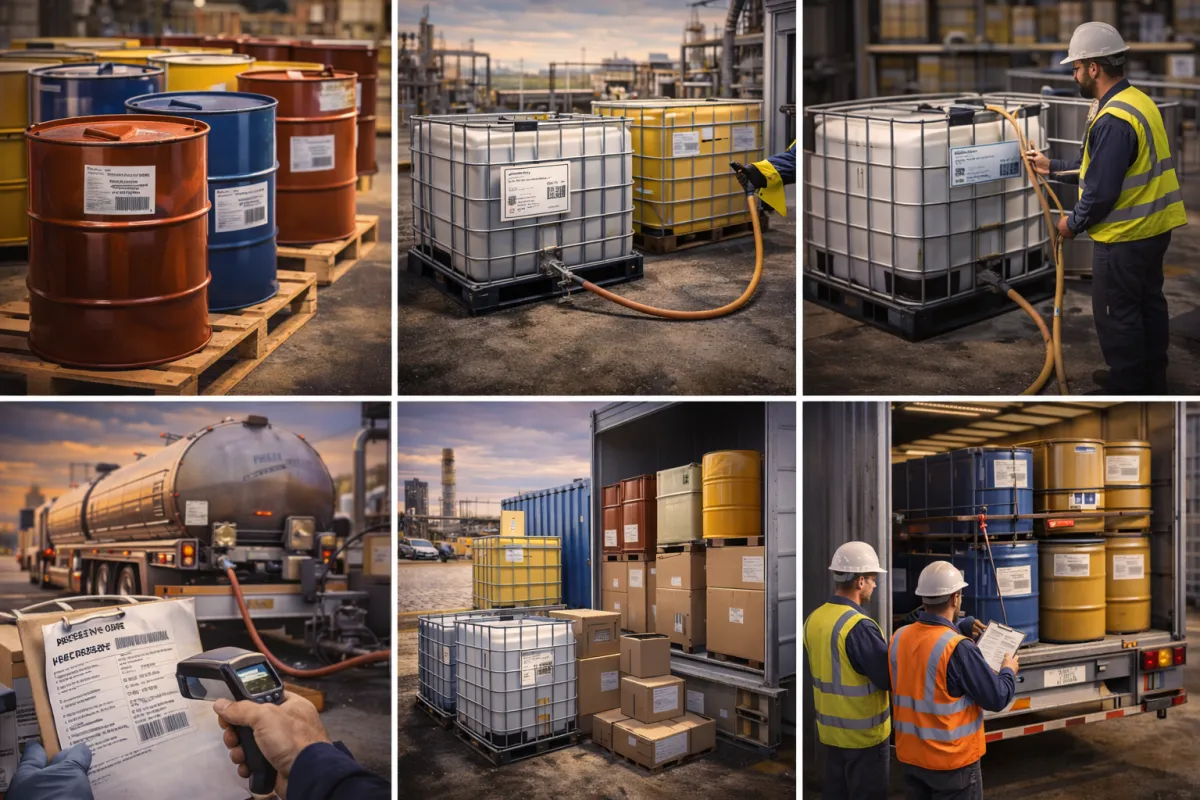
Packaged Supply: Drums and Totes

Packaged formats are common across most industrial sectors.
Typical packaged supply includes:
- Sealed steel drums
- Totes suitable for plant handling systems
- Palletized grease supply
- Structured pallet quantities
Packaged formats support:
- Controlled storage
- Smaller batch replenishment
- Easier internal handling
- Reduced contamination exposure
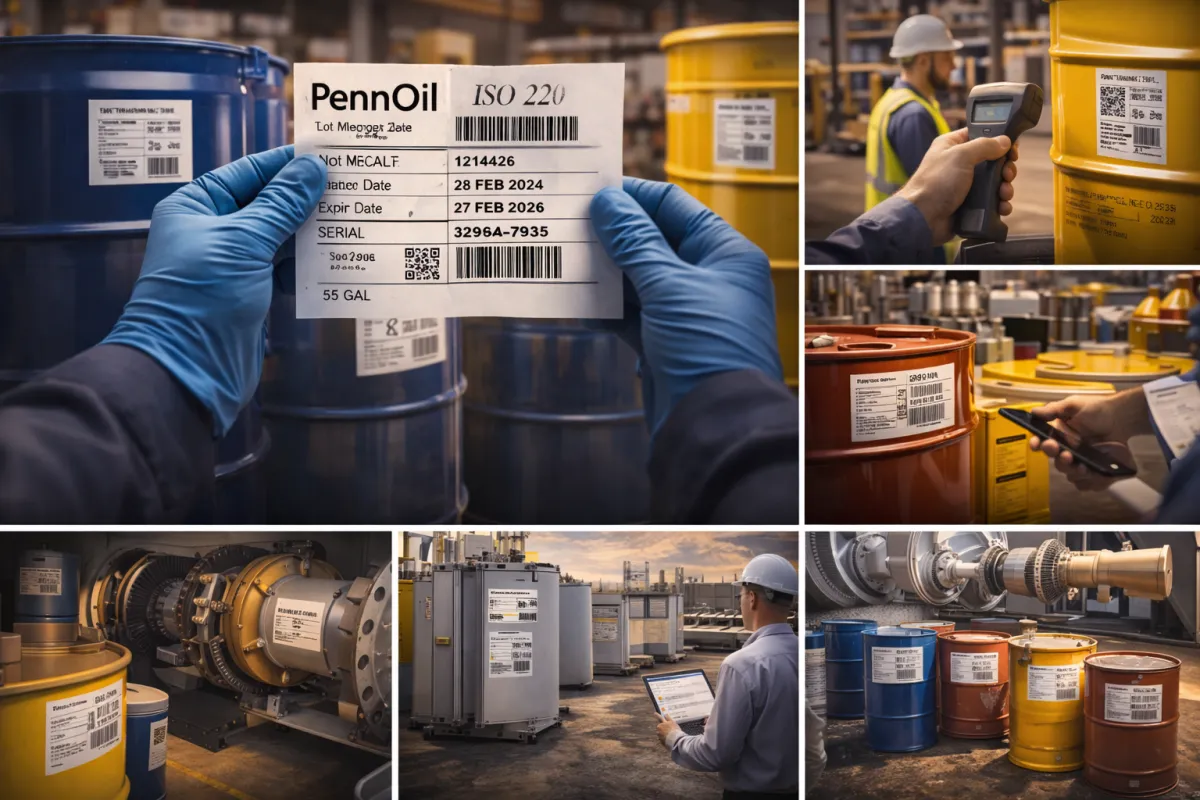
For higher-spec applications such as wind turbine gearbox oils or transformer oils, packaging integrity and labeling clarity are important.
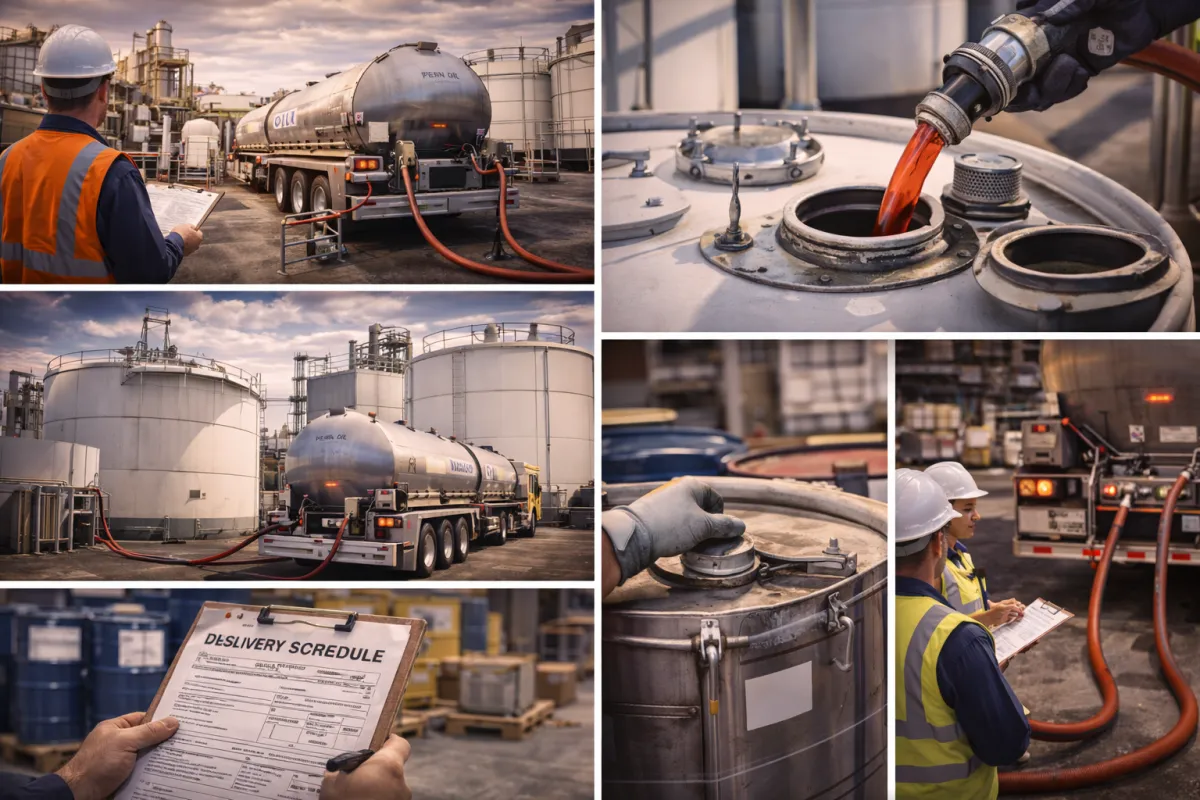
Structured Bulk Supply
Bulk delivery may be appropriate where:
- Consumption volumes are high
- On-site storage tanks exist
- Equipment requires large-volume fill
- Long-term projects require coordinated supply
Bulk supply planning considers:
- Storage capacity
- Pumping systems
- Contamination control procedures
- Delivery access limitations
Bulk deliveries must align with site handling protocols.
Staged and Project-Based Deliveries
Some industries purchase fluids around events rather than on routine cycles.
Examples include:
- Turbine overhauls
- Transformer refill projects
- Heat transfer system replacement
- Plant expansion or commissioning
These projects often require:
- Delivery windows aligned to shutdown schedules
- Partial shipments across multiple dates
- Coordination with engineering and maintenance teams
- Clear documentation and labeling
Structured staging reduces storage strain and timing risk.
Fluid Categories Supported
in Bulk and Packaged Formats
Bulk and packaged supply applies across all primary categories, including:
- Industrial hydraulic fluids
- Turbine oils
- Industrial and wind turbine gear oils
- Compressor oils
- Industrial greases
- Transformer oils and dielectric fluids
- Heat transfer fluids
- Metalworking fluids
- Immersion cooling fluids
Each category may carry different handling expectations depending on the application.

Matching Supply to Storage and Handling Capability
Supplying too much product creates storage and compliance issues.
Supplying too little creates operational exposure.
Supply planning may consider:
- Tank capacity
- Drum storage space
- Secondary containment requirements
- Climate exposure
- Internal transfer equipment
- Inventory management systems
These details vary by facility.
Examples include:
- Mining sites requiring higher inventory buffers
- Power plants aligning deliveries with outage cycles
- Manufacturing plants operating on fixed replenishment intervals
- Understanding operational rhythm improves supply alignment.
Packaging Integrity and Handling Discipline
Industrial fluids must arrive in usable condition.
Packaging considerations include:
- Seal integrity
- Structural stability
- Clear product labeling
- Batch identification when required
- Protection during transport
Particularly for high-spec gear oils, turbine oils, and transformer fluids, handling discipline matters.
Supply integrity protects equipment.

What Buyers Typically Need From Us
- Clear confirmation of packaging format
- Advance notice of bulk delivery timing
- Alignment with internal storage constraints
- Staged shipment planning for projects
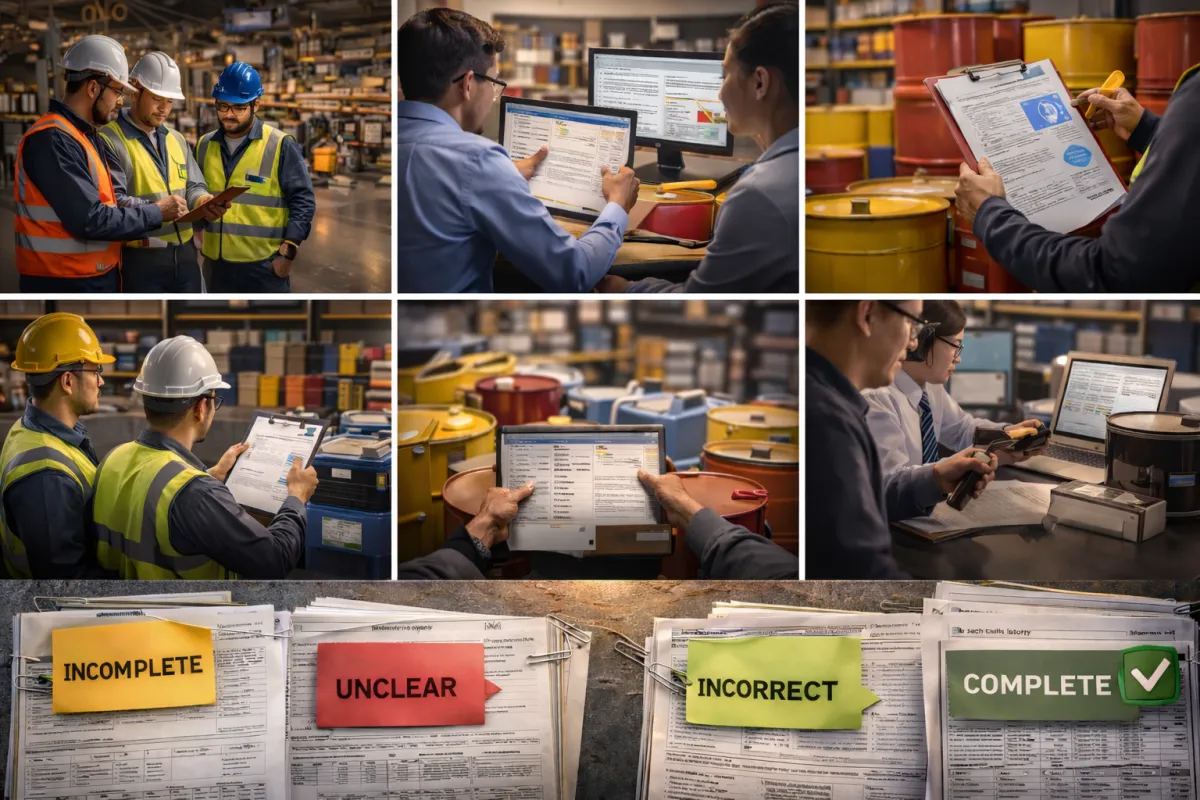
- Labeling clarity for receiving departments
- Documentation attached to shipments
- Repeat-order planning for recurring consumption
- Coordination with maintenance and procurement
Requirements differ by industry and application.
How to Request a Quote
If your facility requires bulk supply, packaged delivery, or staged project coordination, provide your fluid category, estimated volumes, and timing requirements.

FAQ
Do you supply both drums and bulk quantities?
Yes. Supply format is aligned to facility capability and volume requirements.
Can deliveries be staged across multiple shipments?
Yes, when coordinated in advance.
Do you support remote site deliveries?
Planning depends on site access and transport conditions.
Are sealed drums available for high-spec applications?
Yes, when required and aligned to product category.
How do you prevent contamination during transport?
Packaging and handling expectations are clarified prior to shipment.
Do you assist with volume planning?
Supply timing can be structured around known consumption cycles.
Connect with us
Follow us on social media

© Copyright 2026. All rights reserved.
Privacy Policy
Terms and Conditions