Documentation and Compliance
Documentation and Compliance
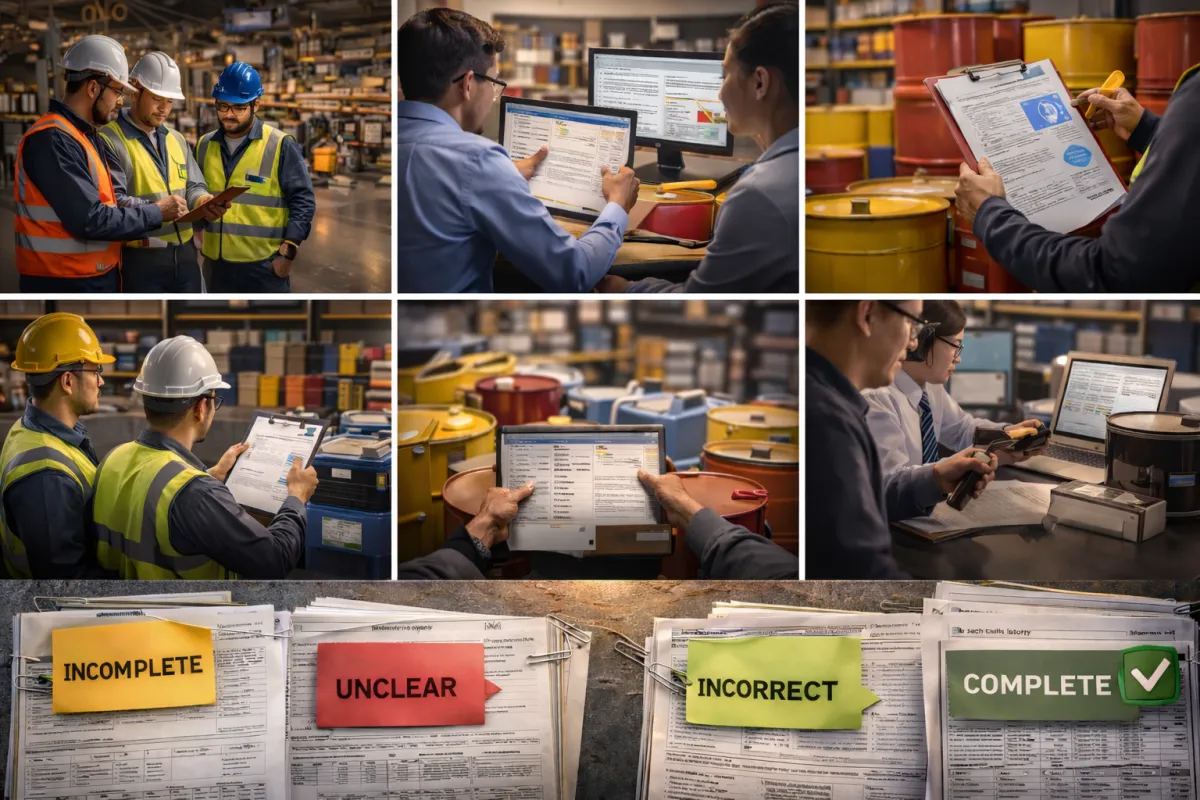
Industrial buyers do not just purchase fluids. They purchase documentation, traceability, and risk control.
In heavy industry, lubrication is tied to safety, regulatory oversight, internal audits, insurance requirements, and equipment warranty protection. If documentation is missing or incomplete, the problem is larger than the shipment.
We structure documentation as part of the product, not as an afterthought.
Why Documentation Matters
in Industrial Fluid Supply
Most facilities have internal processes that require verification before a product is received, stored, or introduced into equipment.
These processes often involve:
- Maintenance teams verifying specification alignment
- Procurement teams confirming supplier compliance
- Environmental or safety teams reviewing hazard classification
- Reliability teams maintaining lubricant records
- Audit teams reviewing batch history
When documentation is inconsistent, incomplete, or unclear, operations slow down.
Clear paperwork reduces friction and protects everyone involved.
Safety Data Sheets (SDS)
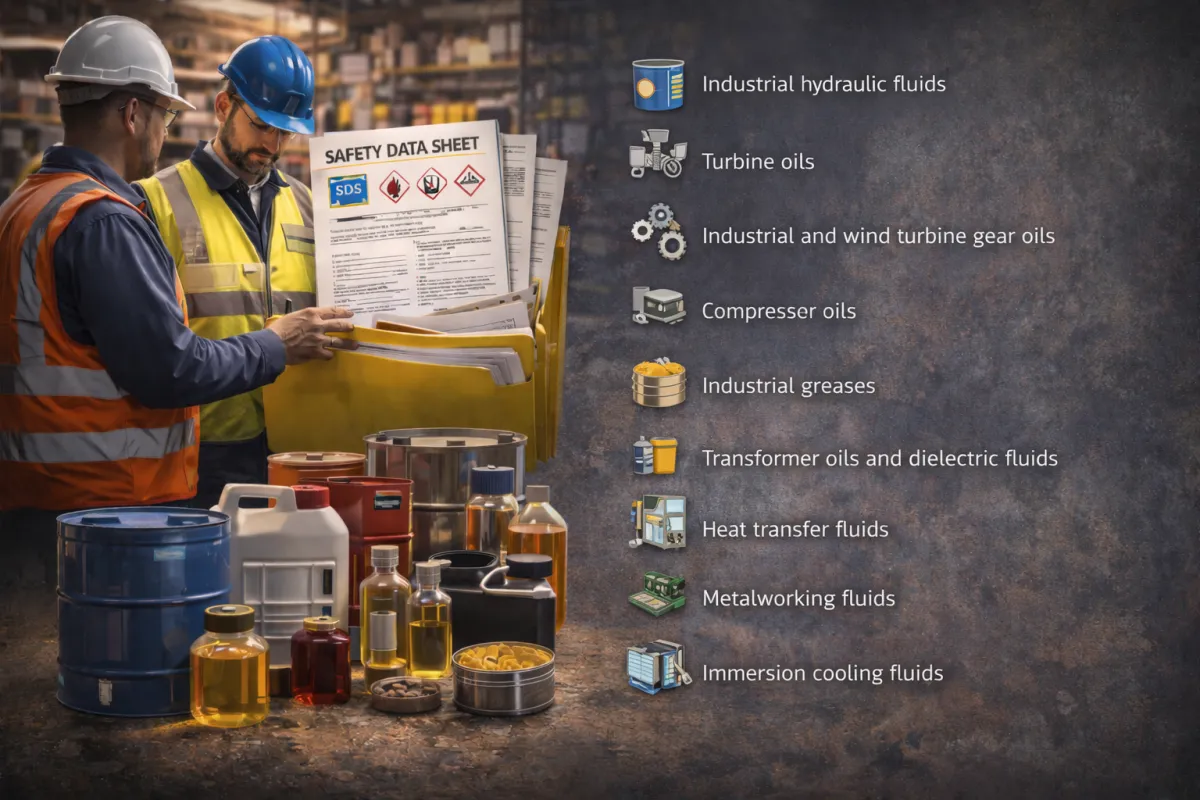
Safety Data Sheets are not optional in industrial environments.
They support:
- Hazard communication compliance
- Employee safety training
- Spill response planning
- Environmental reporting
- Storage and handling procedures
We provide SDS documentation appropriate to the fluid category and application.
Examples of fluid categories supported:
- Industrial hydraulic fluids
- Turbine oils
- Industrial and wind turbine gear oils
- Compressor oils
- Industrial greases
- Transformer oils and dielectric fluids
- Heat transfer fluids
- Metalworking fluids
- Immersion cooling fluids
SDS documentation is maintained in alignment with applicable regulatory frameworks and updated when required by the manufacturer.
Certificates of Analysis (COA)
Certificates of Analysis are often required for higher-spec or mission-critical applications.
COAs support:
- Confirmation of viscosity grade
- Additive package alignment
- Moisture and contamination parameters
- Compliance with internal acceptance criteria
In sectors such as power generation, utilities, wind energy, and oil and gas, documentation precision is part of risk management.
We support COA availability when applicable to the product and batch.

Batch Identification and Traceability
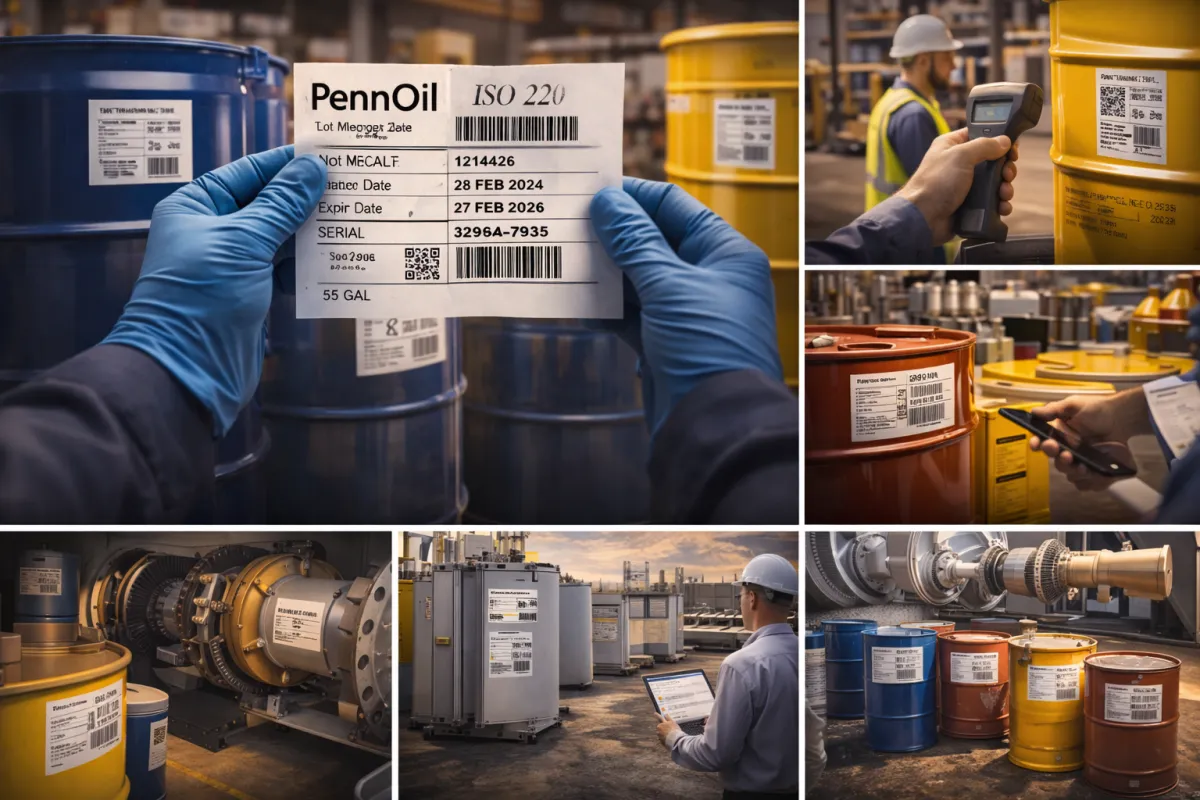
Batch traceability becomes important when:
- Facilities operate under strict audit environments
- Equipment failures require investigation
- Warranty claims involve lubricant verification
- Environmental reporting requires chain documentation
Where required, batch identification and packaging traceability are supported.
Traceability practices may vary by product type and manufacturer. When required, expectations are clarified in advance.
Examples of traceability requirements include:
- Wind turbine gearbox oil supply
- Transformer oil installations
- High-spec turbine oil deliveries
Clarity upfront prevents disputes later.
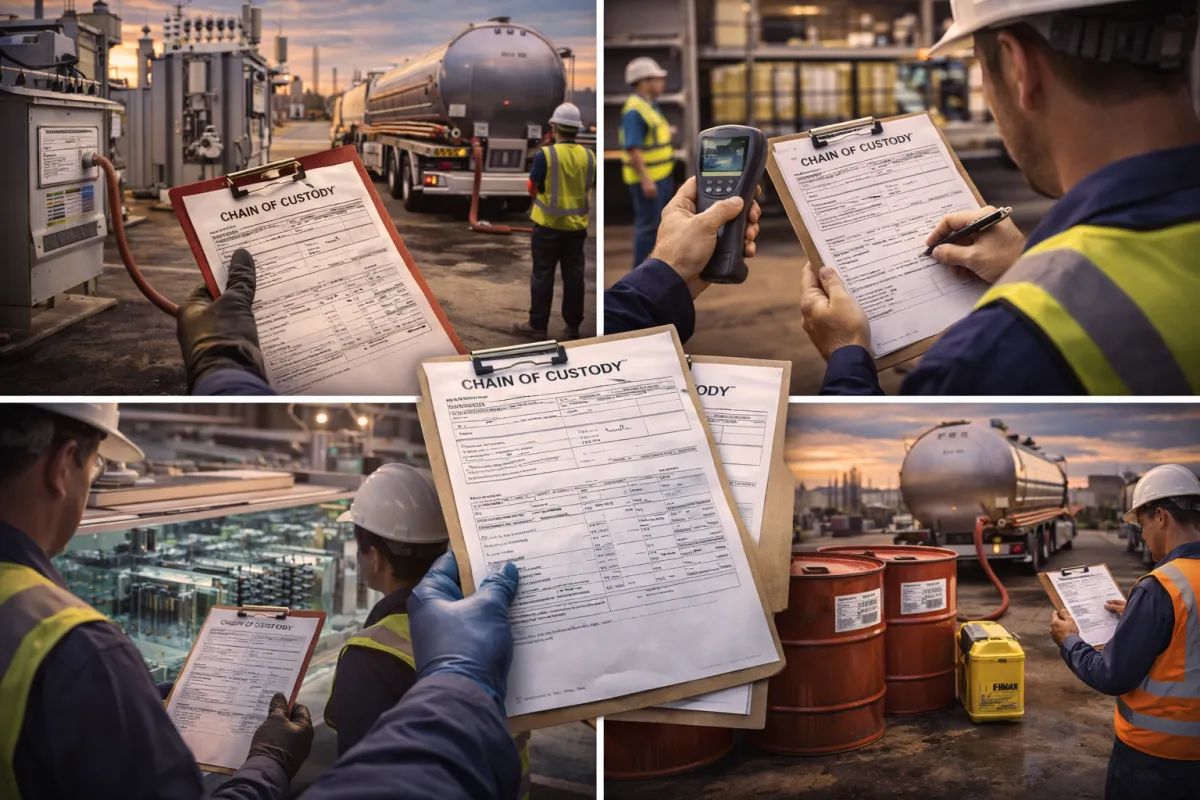
Chain-of-Custody Considerations
Some applications require documented handling from manufacturer to end user.
This may apply to:
- Transformer oil refill projects
- Immersion cooling fluids for data centers
- High-spec turbine oil deliveries
- Certain regulated or environmentally sensitive applications
Chain-of-custody documentation is supported when applicable and coordinated prior to shipment.
We do not claim regulatory approvals or OEM certifications unless verified in writing and aligned to site requirements.
Spec Alignment and Approval Language
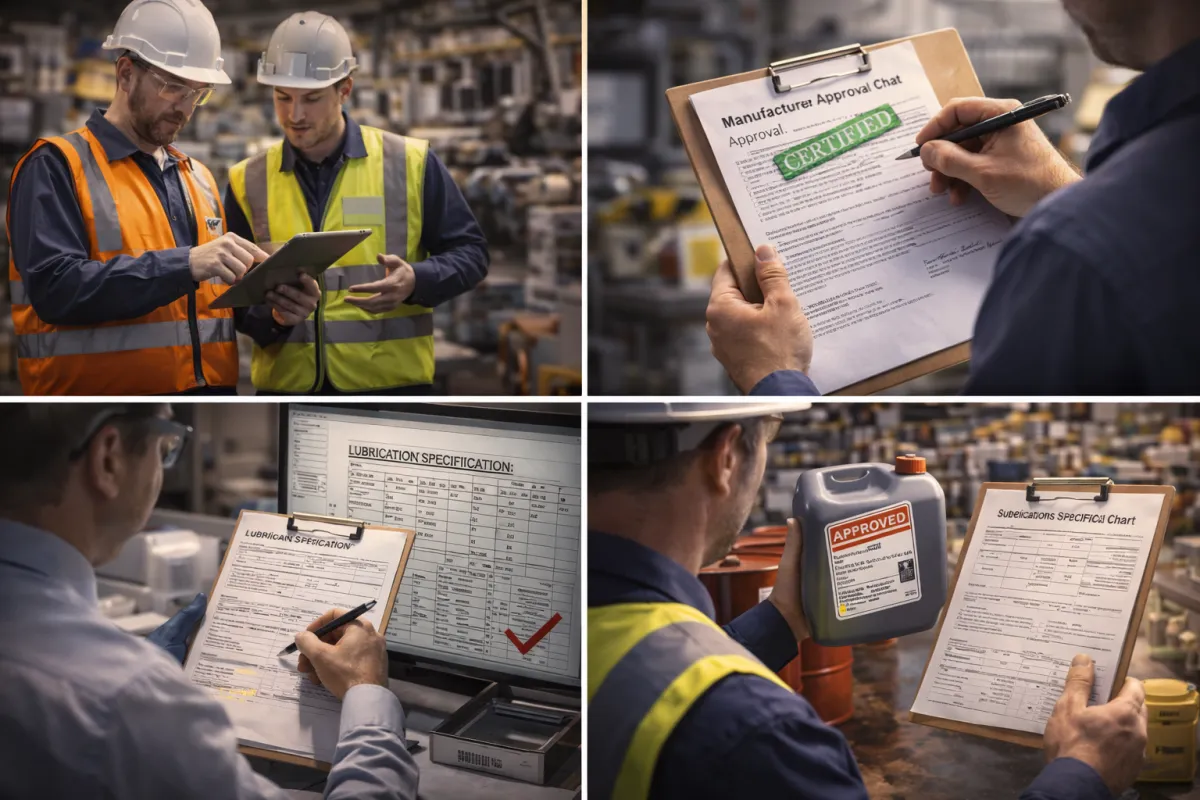
Industrial lubrication language must be precise.
We avoid:
- Unverified claims of “approved” status
- Broad statements implying certification
- Assumptions about cross-compatibility
When a product is aligned to a site specification, that alignment is confirmed against documented requirements.
Spec alignment is never assumed.
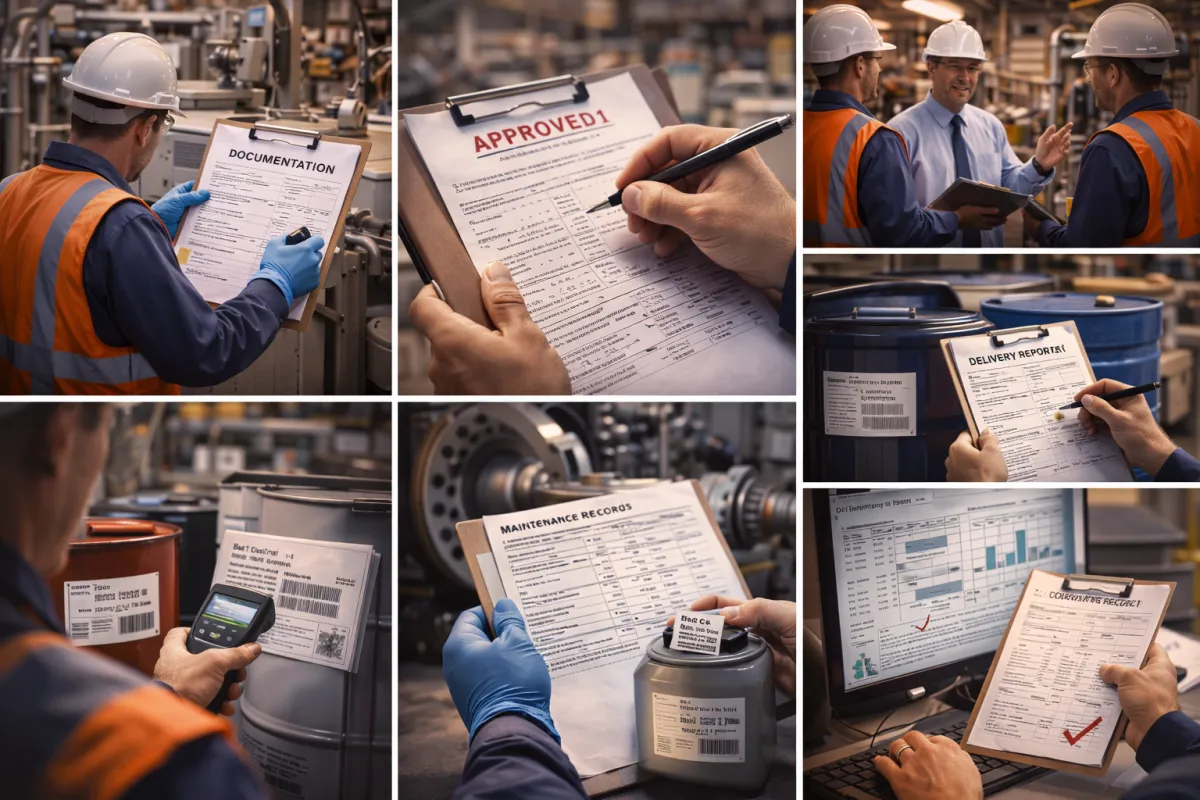
How Documentation Protects Operations
Proper documentation supports:
- Reduced operational risk
- Fewer receiving delays
- Clear internal approvals
- Protection during audits
- Reduced dispute exposure
- Stronger maintenance records
In critical equipment environments, paperwork discipline is part of reliability.
What Buyers Typically Need From Us
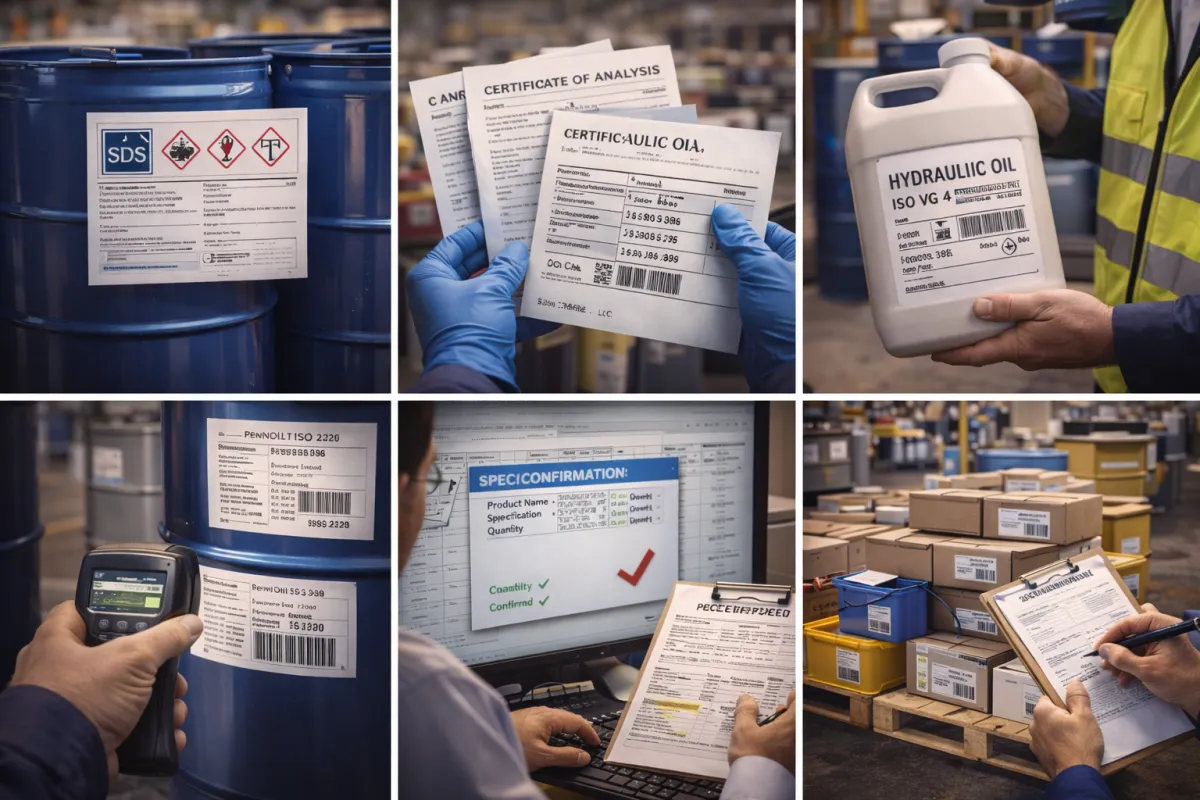
- SDS documentation prior to shipment
- COA availability for critical fluids
- Clear product identification labeling
- Batch tracking when requested
- Documentation aligned to internal ERP systems
- Direct communication regarding spec confirmation
- Advance review before large project deliveries
- Clear recordkeeping support for repeat orders
Requirements vary by industry and internal policy.
How to Request a Quote
If your facility requires structured documentation, traceability alignment, or spec verification support, provide your fluid category and documentation requirements.
FAQ
Do all shipments include SDS documentation?
Yes, where required and applicable to the product category.
Are Certificates of Analysis available for all products?
COA availability depends on the product and manufacturer. It is confirmed prior to supply when required.
Do you provide OEM approval documentation?
Only when verified in writing and aligned to the specific product.
Can documentation be provided before shipment?
Yes, when requested during order processing.
Do you support transformer oil documentation requirements?
Yes, when coordinated prior to project execution.
Is batch traceability available for wind turbine gearbox oil?
When required, traceability expectations are clarified before supply.
Connect with us
Follow us on social media

© Copyright 2026. All rights reserved.
Privacy Policy
Terms and Conditions