Industrial Hydraulic Fluids Supplier
Industrial Hydraulic Fluids | AW, HVLP, Fire-Resistant Supplier
Overview
Hydraulic fluids (industrial) are used to transmit power, lubricate internal components, and protect hydraulic systems from wear, corrosion, and contamination. These fluids operate in fixed plant systems, mobile equipment, and centralized hydraulic networks.
Selecting the correct fluid is not about brand preference. It is about viscosity grade, compatibility, temperature range, and compliance with site specifications.
Subcategories We Supply
Subcategories We Supply
- Anti-Wear Hydraulic Oil ISO 32, 46, 68
- HLP / HM (DIN 51524-2)
- HVLP / HVI (DIN 51524-3)
- Zinc-Free / Ashless Hydraulic Oil
- Fire-Resistant Hydraulic Fluids
- EAL / Biodegradable Hydraulic Fluids
- Premium Severe-Duty Hydraulic Oils
- Cold-Climate Hydraulic Oils
- Food-Grade H1 Hydraulic Fluids
- Private Label Hydraulic Oils

What We Supply

We support bulk and packaged hydraulic fluids including:
- 55-gallon drums
- Totes
- Palletized drum quantities
- Bulk delivery where available
- Packaging format depends on location, availability, and logistics.
See our Bulk and Packaged Supply page for details.
Documentation and Compliance
Documentation matters in industrial environments.
When available, we provide:
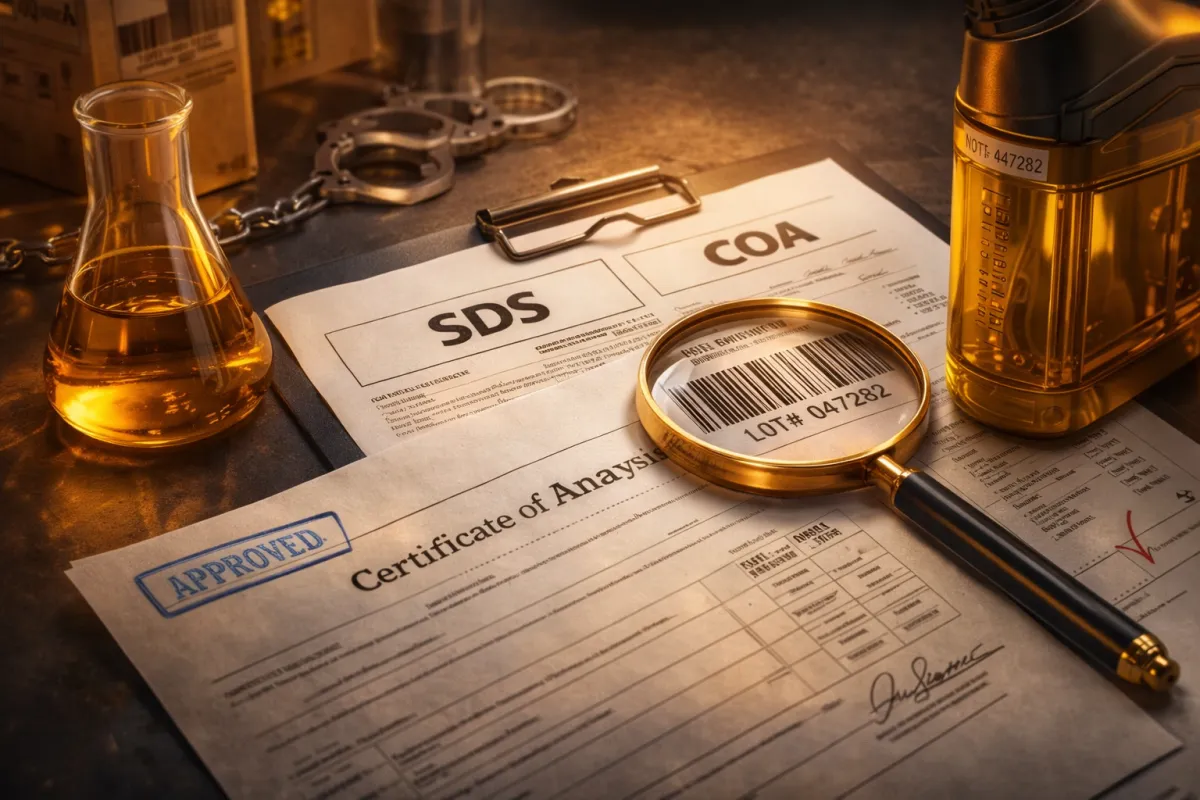
- Safety Data Sheets (SDS)
- Certificate of Analysis (COA)
- Batch or lot identification
- Product data sheets
Fluid selection should always be aligned with your site specification and compatibility requirements. We recommend verifying fluid compatibility before changeover.
See our Documentation and Compliance page for more detail.
How to Request a Quote
Provide:
- ISO grade or specification
- Packaging format
- Volume required
- Delivery location
- Any site-specific compliance requirements
Submit details via our Contact page.
FAQ
What is the difference between AW and HVLP hydraulic oil?
AW focuses on anti-wear protection. HVLP also maintains viscosity over wider temperature ranges.
Is ISO 46 the same as AW 46?
ISO 46 refers to viscosity grade. AW 46 typically means ISO 46 with anti-wear additives.
Can hydraulic fluids be mixed?
Mixing should only occur after confirming compatibility.
What documentation is typically required?
SDS and COA are commonly requested.
When is zinc-free required?
Some sites restrict zinc due to environmental or system sensitivity reasons.
What is HFC hydraulic fluid?
HFC is a water-glycol fire-resistant hydraulic fluid.
What is HFD hydraulic fluid?
HFD refers to synthetic or phosphate ester fire-resistant fluids.
When is EAL required?
Often in environmentally sensitive areas such as ports or waterways.
What does NSF H1 mean?
It indicates suitability for incidental food contact in regulated facilities.
How do I choose ISO 32 vs 46 vs 68?
Based on operating temperature and manufacturer specification.
Common Hydraulic Fluid Mistakes That Cause Downtime
Common Hydraulic Fluid Mistakes That Cause Downtime
- Using the wrong ISO viscosity grade.
- Mixing zinc-free and zinc-based fluids without confirmation.
- Ignoring temperature range requirements.
- Failing to verify fire-resistant compatibility.
- Switching brands without checking additive chemistry alignment.
- Using mineral oil where EAL is mandated.
- Overlooking documentation during audits.
- Delaying fluid replacement during shutdown planning.
- Storing drums improperly leading to contamination.
- Failing to confirm seal compatibility before changeover.
Connect with us
Follow us on social media

© Copyright 2026. All rights reserved.
Privacy Policy
Terms and Conditions